Problem
The original chase sustained attention, but keyboard-only arrows and precise stopping required adult help. Simplifying it into static picture tapping then removed the avatar, motion, and fun of pursuit.
A child repeatedly chose the version with a baby avatar, lively pursuit, and spoken collision feedback. This standalone experiment preserves that loop across five unlockable real-picture categories.
The original chase sustained attention, but keyboard-only arrows and precise stopping required adult help. Simplifying it into static picture tapping then removed the avatar, motion, and fun of pursuit.
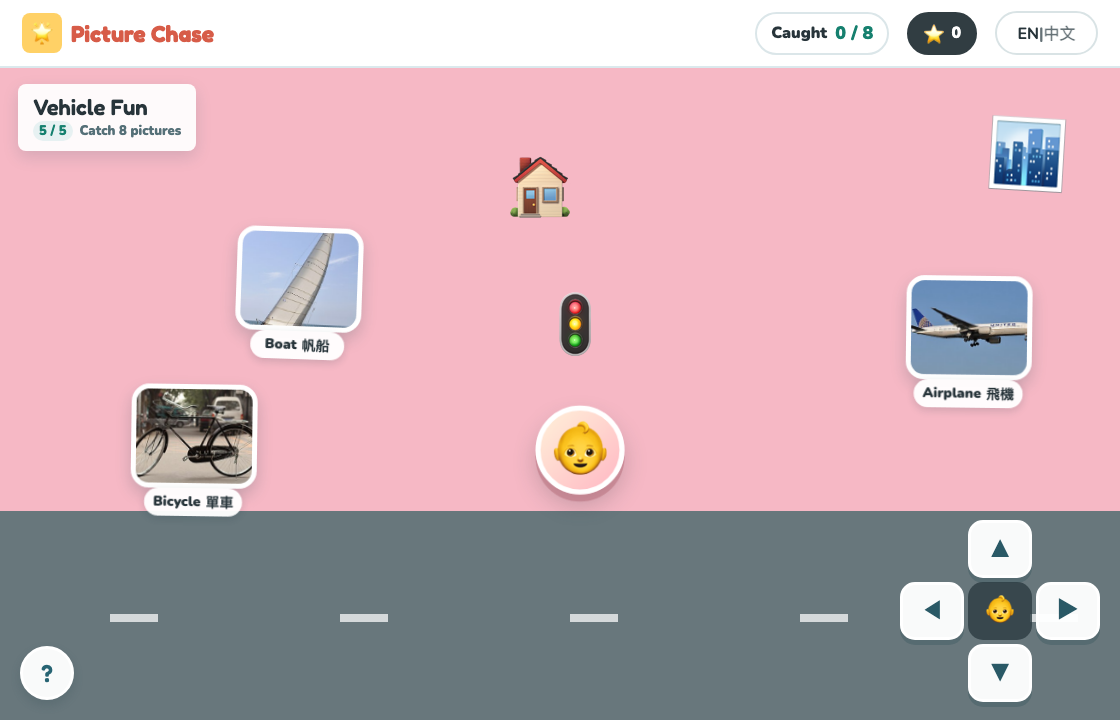
Rebuilt the continuous chase loop across animal, fruit, vegetable, ocean, and vehicle levels. Each has its own setting, six local photographs, and a category badge, with flexible controls and device-aware selection of more natural English and Cantonese voices.
Turned one formative family observation into a fuller testable product: preserve avatar, motion, and pursuit while reducing control cost. Five levels use 30 sourced Commons images; unlock progress stays in the browser with no account or child-data collection.
Choose a baby or another hero, then progress from animals through fruit, vegetables, ocean life, and vehicles.
Pictures float and drift continuously while the child chases with the on-screen direction pad, keyboard arrows, or direct dragging.
Gentle assistance activates only near a target, with a collision cooldown to prevent accidental chain catches.
A collision bursts stars and adds points, then speaks English followed by Cantonese using the most natural suitable voices available on the device.
A muted capture of the real public mobile game, showing hero selection, on-screen direction controls, moving photographs, and two hit states. The public demo speaks each English and Cantonese name after a hit; this portfolio loop stays muted for considerate autoplay.
Captured · 2026-08-23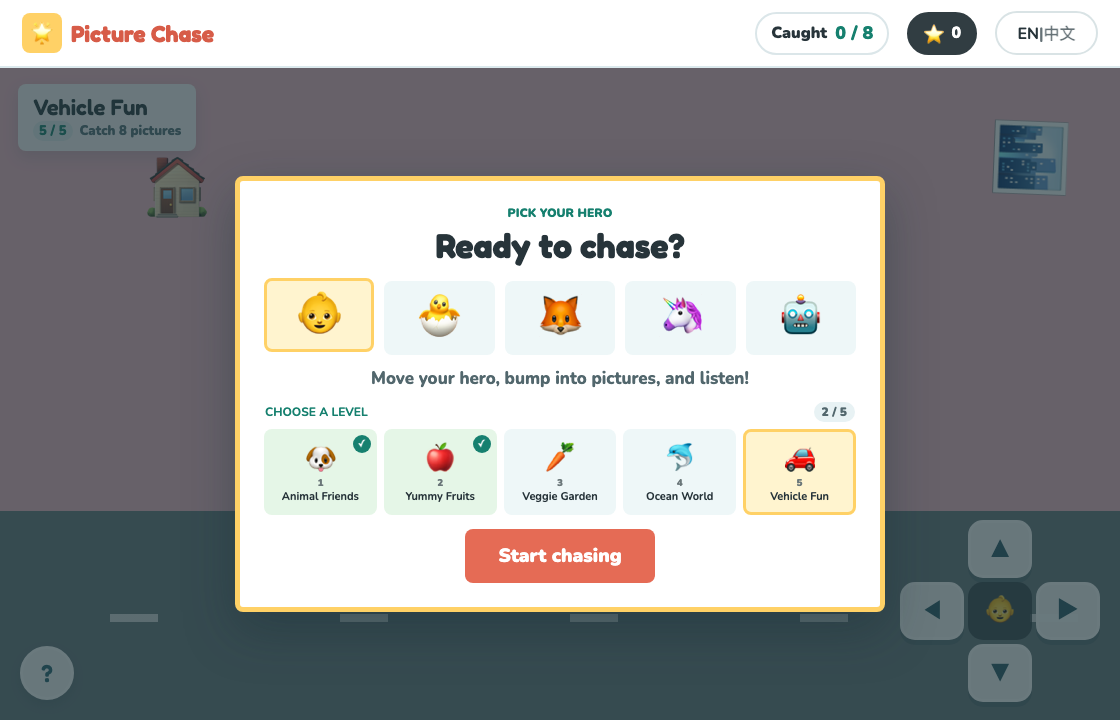
Eight catches earn the category badge and unlock the next level. Progress stays in the current browser without login or child-data uploads.
Picture Chase is not a Little Spark activity or replacement. Little Spark explores structured bilingual learning across multiple activities; Picture Chase tests whether recognition, pursuit, and spoken naming can sustain voluntary play with less adult control support.
The design comes from one child's repeated preference during informal family use. That is enough to form a sharper hypothesis, but not to claim educational effectiveness, general usability, or a curriculum outcome.
The next observation should record whether the child reaches a first hit without adult input, which category sustains play longest, whether badge progression motivates another level, and where image, speech, or control friction causes disengagement.